


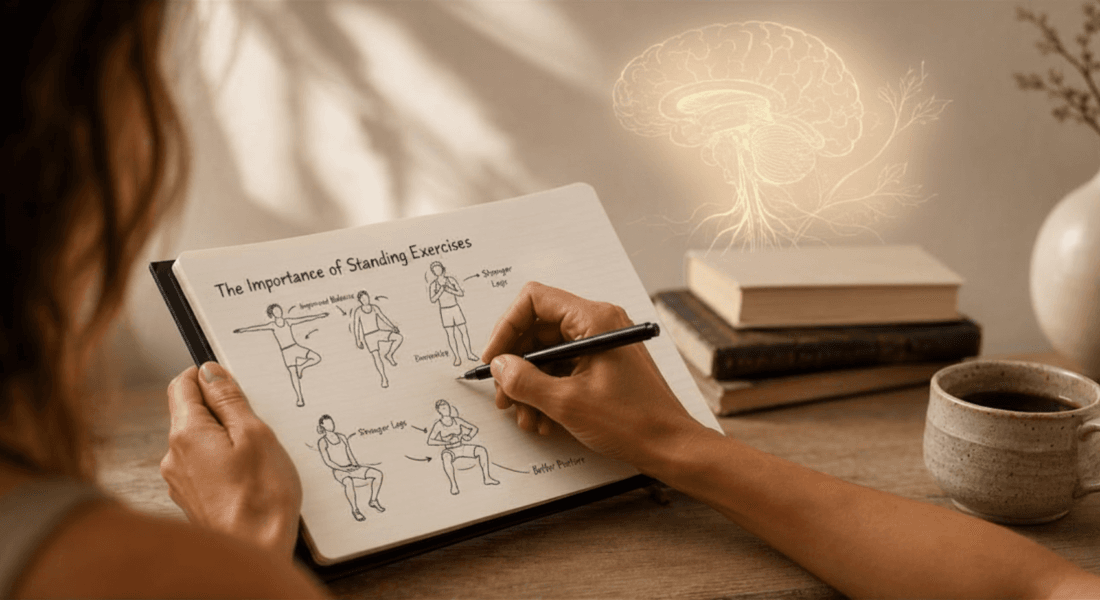
Tầm quan trọng của các bài tập đứng: Khôi phục sức mạnh, cân bằng và sự hiện diện
Trong cuộc sống hiện đại, hầu hết chúng ta dành nhiều thời gian ngồi hơn so với những gì cơ thể chúng ta được thiết kế để chịu đựng. Chúng ta ngồi khi làm việc, khi di chuyển, khi ăn uống, và cả khi nghỉ ngơi. Tất cả những điều này ảnh hưởng đến tư thế, cách thở, sự cân bằng của chúng ta, và thậm chí cả cách chúng ta cảm nhận bản thân trong chính cơ thể mình.
Các bài tập đứng mời gọi chúng ta quay trở lại mối quan hệ với Trọng lực, căn chỉnh và hỗ trợ. Chúng nhắc nhở cơ thể về cách nó được thiết kế để di chuyển.
Xây dựng lại nền tảng của chúng ta
Đứng không chỉ đơn thuần là “đứng thẳng.”
Đó là một cuộc trò chuyện toàn thân giữa:
- Chân và mặt đất
- Xương chậu và cột sống
- Cơ bắp và xương
- Hơi thở và cân bằng
Khi chúng ta đứng với sự nhận thức, chúng ta rèn luyện cơ thể để phân phối trọng lượng một cách hiệu quả thay vì rơi vào thói quen. Các bài tập đứng kích hoạt các cơ ổn định — những cơ giúp chúng ta duy trì sự cân bằng, thẳng đứng và được hỗ trợ khi di chuyển trong cuộc sống hàng ngày.
Đây là những cơ giúp chúng ta đi bộ, leo cầu thang, nâng đồ mua sắm và duy trì tư thế suốt cả ngày.
Cân bằng: Trí tuệ tự nhiên của cơ thể
Cân bằng không phải là điều mà chúng ta có hoặc Không có.
Đó là một kỹ năng — một kỹ năng có thể được rèn luyện, hoàn thiện và củng cố.
Các bài tập đứng có đặc điểm riêng biệt vì chúng yêu cầu cơ thể phải liên tục điều chỉnh để thích nghi với những thay đổi nhỏ về trọng lượng và trọng lực. Mỗi sự dao động nhỏ, mỗi sự thay đổi áp lực dưới chân đều gửi thông tin đến não:
Tôi đang ở đâu trong không gian?
Làm thế nào để tôi giữ thăng bằng?
Làm thế nào để di chuyển với ít sức lực hơn?
Những điều chỉnh liên tục này chính là yếu tố duy trì sự cân bằng. còn sống, linh hoạt và kiên cường.
Cân bằng phụ thuộc vào:
- Cảm giác ở chân
- Sự ổn định cốt lõi
- Sức mạnh cơ chân
- Tập trung và sự hiện diện
- Phản hồi từ tai trong và thị giác
Khi chúng ta tập luyện sự cân bằng khi đứng, chúng ta đang tập luyện Sự phối hợp của toàn bộ cơ thể + hệ thần kinh.
Điều này không chỉ đơn thuần là ngăn ngừa té ngã — mặc dù điều đó rất quan trọng, đặc biệt là khi chúng ta già đi.
Điều này liên quan đến việc nuôi dưỡng. Sự tự tin trong chuyển động.
Sự tự tin để đi nhanh hơn.
Để leo lên.
Để chơi.
Để nhảy múa.
Hành động mà không do dự.
Cân bằng là tự do.
Hỗ trợ mật độ xương và tuổi thọ
Tập luyện chịu trọng lượng — bao gồm cả việc đứng — là yếu tố quan trọng để duy trì độ đặc của xương.
Điều này đặc biệt quan trọng trong giai đoạn tiền mãn kinh và sau mãn kinh, khi sự thay đổi hormone có thể làm tăng tốc độ mất xương.
Các động tác đứng như:
- Squats
- Bước lunge
- Nâng gót chân
- Bước lên
Kích thích sự phát triển của xương Thích ứng và củng cố Để đáp ứng với tải trọng. Đây là cách cơ thể tự bảo vệ mình theo thời gian: bằng cách phản ứng với việc sử dụng, mục đích và chuyển động.
Xương là mô sống — chúng phát triển khi chúng ta yêu cầu chúng tham gia.
Sự quan trọng của đôi chân
Chúng ta thường coi sự cân bằng như một thứ tách biệt với sức mạnh hoặc tư thế.
Nhưng sự cân bằng xuất phát từ:
- Cảm giác ở chân
- Sự kết nối giữa não và hệ thần kinh cơ thể
- Ổn định lõi
- Phản hồi thị giác và phản hồi từ tai trong
Các bài tập đứng giúp cơ thể rèn luyện khả năng phối hợp đồng thời tất cả các hệ thống này.
Điều này không chỉ giúp ngăn ngừa té ngã — mà còn hỗ trợ. sự tự tin, sự tự chủ và sự thoải mái trong các hoạt động hàng ngày. Khi chúng ta tin tưởng vào khả năng giữ thăng bằng của mình, chúng ta di chuyển một cách tự do hơn.
Tư thế như một trải nghiệm thể hiện qua cơ thể
Thực hành đứng giúp chúng ta hiểu tư thế không phải là một hình dạng để “giữ”, mà là một... Điều chỉnh động.
Một tư thế được tổ chức tốt là linh hoạt, thích ứng và tràn đầy sức sống.
Các bài tập đứng giúp chúng ta cảm nhận:
- Chúng ta dựa vào đâu
- Nơi chúng ta nắm giữ
- Nơi chúng ta sụp đổ
- Nơi chúng ta có thể làm mềm
- Nơi chúng ta có thể cao hơn
Tư thế không còn tập trung vào việc “đúng đắn” mà chuyển sang Sự hiện diện.
Tái kết nối với chính mình
Có điều gì đó rất sâu sắc và vững chãi khi đứng với sự tỉnh thức trọn vẹn.
Chân chạm đất.
Hơi thở lưu thông tự do.
Cột sống đang nâng lên.
Cơ thể được tổ chức.
Chú ý ngay tại đây và ngay bây giờ.
Các bài tập đứng không chỉ là tập luyện thể chất — chúng là sự trở lại với hiện thân.
Khi đứng, chúng ta thấy:
- Sức mạnh tự nhiên
- Sự đồng bộ hóa diễn ra một cách tự nhiên và dễ dàng.
- Chuyển động cảm thấy được hỗ trợ
- Sự tự tin thực sự
Đó là một phương pháp giúp cơ thể nhớ lại những gì nó đã biết.
Tóm tắt
Các bài tập đứng quan trọng vì chúng giúp chúng ta kết nối lại với:
- Cách chúng ta di chuyển trong cuộc sống thực tế
- Sức mạnh của nền tảng của chúng tôi
- Mối quan hệ của chúng ta với trọng lực
- Cảm giác gắn bó và hiện diện của chúng ta
Dù bạn đang tập Pilates, yoga, tập luyện sức mạnh hay các bài tập vận động có ý thức — tư thế đứng chính là nơi cơ thể học cách... Áp dụng thực hành vào cuộc sống hàng ngày.
Tư thế, sự cân bằng, sự tự tin và sự thoải mái của bạn đều bắt đầu từ đôi chân.
Đứng không chỉ là một tư thế tập luyện.
Đó là ngôi nhà.